How Does a Soda Maker Work?
A soda maker works by forcing pressurized carbon dioxide into cold water inside a sealed bottle. You fill the bottle to its line, snap it onto the machine, press the lever or button a few times, and the dissolved CO2 turns plain tap water into sparkling water.
On this page (10 sections)
- What parts does a soda maker use?
- How does a soda maker carbonate water step by step?
- Why does the water need to be cold?
- How does a soda maker create the bubbles?
- How does a soda maker make soda, not just sparkling water?
- How does the CO2 cylinder fit into the process?
- Manual vs electric: how does the process change?
- What kinds of bottles and cleaning do soda makers need?
- How do you keep the fizz and keep the machine clean?
- So, how does a soda maker work?
A soda maker works by forcing pressurized carbon dioxide into cold water inside a sealed bottle. You fill the bottle to its line, snap it onto the machine, press the lever or button a few times, and the dissolved CO2 turns plain tap water into sparkling water.
The whole job takes seconds, and the machine stays on your counter. The only real consumable is the CO2, and the machine presses it into water you already have at home.
What parts does a soda maker use?
Three parts do the work: a CO2 cylinder, a pressure valve and lever, and a sealed bottle. Everything else on the machine is frame and housing.
The cylinder holds gas under high pressure. A pin or valve on top releases it when the machine's lever pushes it.
The bottle seals against a nozzle, so the gas has nowhere to go but into the water. Carbonation happens only while that seal holds.
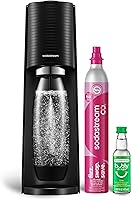
Some machines hold the bottle with a snap-and-seal fitting. The SodaStream Terra, for example, clicks a Quick Connect cylinder in with one push and snaps the bottle into place before you fizz.
That seal keeps the bubbles in the bottle and the water off your counter.
The machine body itself does very little. It holds the cylinder steady, carries the lever or button, and presses the bottle against the nozzle.
The slim Terra measures about 3.07 inches deep, 7.9 inches wide and 16.9 inches tall, so most of its height comes from the cylinder standing upright inside the housing.
How does a soda maker carbonate water step by step?
Fill, chill, seal, press, release, and pour. Here is the order in plain terms:
- Fill the bottle with cold water to its marked line.
- Snap or screw the bottle onto the machine.
- Press the lever or button a few times for a light or strong fizz.
- Let the pressure settle, then remove the bottle.
- Seal it and store it cold, or add flavor and pour.
One slow press gives a light fizz. A few more presses build a stronger bubble.
The Terra's manual operation works exactly this way, with no power cord and no screen.
The "let it settle" step matters more than people expect. Right after pressing, the water is full of gas at cylinder pressure.
If you pull the bottle off too fast, some of that gas escapes before it can dissolve. A few seconds of quiet lets the pressure drop slowly, so more CO2 stays in the water instead of bubbling out over the nozzle.
Why does the water need to be cold?
Cold water holds more CO2 than warm water. Chilling first is the single easiest way to get a livelier drink and keep it fizzy longer.
Gas dissolves better in cold liquid, so a bottle straight from the fridge takes carbonation more readily than lukewarm tap water. It also stays bubbly after pouring.
If the water is warm, you press and press, and the fizz fades before you sit down.
Use cold water from the tap or fridge, never ice. Fill only to the bottle's fill line so the gas has headspace to work in.
Overfilling leaves no room for the gas to press into the water, and it can push water up into the nozzle during carbonation.
How does a soda maker create the bubbles?
The CO2 dissolves into the water under pressure, and the bubbles form when pressure drops. While the bottle is sealed and pressurized, the gas sits dissolved and invisible.
When you release the bottle and pour, the pressure falls to room level. The dissolved CO2 comes out of solution as bubbles, which is the fizz you taste.
The longer the water stays sealed and cold, the more gas stays in it.
This is the same physics as bottled sparkling water. A soda maker just skips the factory, the truck and the plastic bottle.
Because the gas goes into water in your kitchen, you also decide how much goes in. A single press leaves a gentle sparkle.
Several presses give you the sharp, full bubble you get from a commercial bottle.
How does a soda maker make soda, not just sparkling water?
You carbonate plain water first, then add flavor afterward. Syrup, drops or a squeeze of citrus go in after the fizz, never in the carbonating bottle.
Add flavor drops for zero-sugar sparkling water. Stir in a cola syrup for a classic soda.
The flavor step is separate because sugar and pulp in the bottle can foam over or clog the valve.
The SodaStream Pepsi Zero Sugar mix makes about 24 servings per bottle and roughly 96 drinks per 4-pack. You control the strength, from a light crisp cola to a bolder pour.
It has zero sugar and zero calories, with 37 mg of caffeine per 12 fl oz.
The Terra bundle includes two bubly flavor drops alongside the machine, so one setup covers both habits. The machine does not change between those drinks.
Only what you add after the fizz changes.
How does the CO2 cylinder fit into the process?
The cylinder is the fuel. Every press pulls a little gas from it, and when it empties you swap or refill it.
A 60L Quick Connect cylinder makes up to 60 liters (16 gallons) of sparkling water. When it runs low, you return, refill and reuse it through cylinder exchange at participating retailers.
The cylinder is the only part that runs out, and most of the running cost sits in the gas rather than the hardware.
The Terra value bundle ships with two 60L Quick Connect cylinders, so the second one is ready when the first gives out.
The Terra bundle includes the maker, CO2 cylinders, three dishwasher-safe BPA-free bottles and two bubly flavor drops. The slim machine sits neatly on the counter and tucks under most upper cabinets.
Having three bottles means you can keep one chilling in the fridge while another is on the machine and a third is drying after a wash.
Manual vs electric: how does the process change?
The chemistry is identical; only the button changes. A manual machine uses your hand on a lever.
An electric one runs a motorized carbonation cycle.
Manual machines cost less and need no outlet. You control the fizz by feel, which suits people who like a light, medium or strong bubble.
Electric models press the button and carbonate to a set level, which suits anyone who wants the same result every time without counting presses.
Both still use a CO2 cylinder. For a closer look at the powered options, our guide to electric sparkling water makers covers the models that plug in.
For an overview of both types, see how to choose a sparkling water maker.
What kinds of bottles and cleaning do soda makers need?
The machine's own bottles are the only safe choice, and they need a rinse after every round. They are built to take the pressure and to seal against the nozzle.
Plastic bottles are light and dishwasher safe. The Terra's bottles are BPA free and dishwasher safe, ready for the next round.
Glass bottles feel more solid and resist flavor carryover, but they are heavier and need careful handling. Our guide to sparkling water makers with glass bottles covers the glass options.
Never carbonate in a bottle not made for the machine. A still-water bottle or a store-bought soda bottle is not built for the pressure and can fail.
How should you handle the bottles between rounds?
Rinse them right after pouring, before syrup or juice can dry on the base. The snap fitting on top should stay clean too, since a crusted seal lets gas escape during the next press.
A dedicated carbonating bottle also keeps flavors from crossing over. If you fizz cola in one bottle and plain water in another, the plain water stays neutral.
The Terra's three-bottle setup makes that easy to manage.
How do you keep the fizz and keep the machine clean?
Chill the water, seal the bottle, and rinse or brush the bottle after every round. Small habits keep the bubbles and the taste.
Keep filled bottles in the fridge, capped, until you pour. Don't leave a carbonated bottle open on the counter.
Rinse the bottle with warm water after each use and let it air-dry. A long soft brush reaches the base without scratching.
The BOXOB brush has nylon and cotton bristles and a stainless steel rod. It's dishwasher safe and has a hanging ring on the handle.
It fits soda maker bottles and also works on baby bottles, sports bottles and wine glasses. Wipe the nozzle and the seal on the machine now and then so syrup doesn't build up.
Skip the brush if you only ever fizz plain water and rinse well. Pick it up if you use syrups often, since sugar residue is what flattens the next batch.
So, how does a soda maker work?
It pressurizes cold water with CO2 from a cylinder and seals it in a bottle, and the gas dissolves into the water. Press the lever, let the pressure settle, and pour.
That is the whole process.
The cylinder is the only thing you replace. Pick a manual machine if you want to control each press by hand.
Pick an electric model if you want the same carbonation level every time.
Either way, start with cold water, fill to the line and seal the bottle after fizzing. For the wider set of choices, compare the best sparkling water makers before you buy.
Frequently asked questions
Does a soda maker need electricity?
A manual soda maker does not need electricity. It uses the pressure of the CO2 cylinder and a lever you press by hand.
An electric model plugs in to run its carbonation cycle, but the CO2 still comes from the cylinder.
How much CO2 goes into one bottle of water?
One press releases a short burst of CO2 into the bottle. A few presses dissolve more gas and give a stronger fizz.
A 60-liter cylinder makes up to 60 liters of sparkling water in total, so each liter uses roughly one sixtieth of the cylinder.
Why does my soda maker water go flat so fast?
Cold water holds more dissolved CO2, so chilled water keeps its fizz longer. Seal the bottle right after fizzing and keep it in the fridge.
Rinse the bottle and brush it between flavors, because residue gives the next batch a flat taste.
Can you carbonate juice or wine in a soda maker?
No. Only plain water should go into the carbonating bottle.
Sugar, pulp and alcohol in juice or wine can foam over or clog the valve.
Fizz plain water first, then add syrup or a squeeze of citrus afterward.